
Spasticity Syndrome
Collaborative Assessment and Management
Lecture and Lab
Description
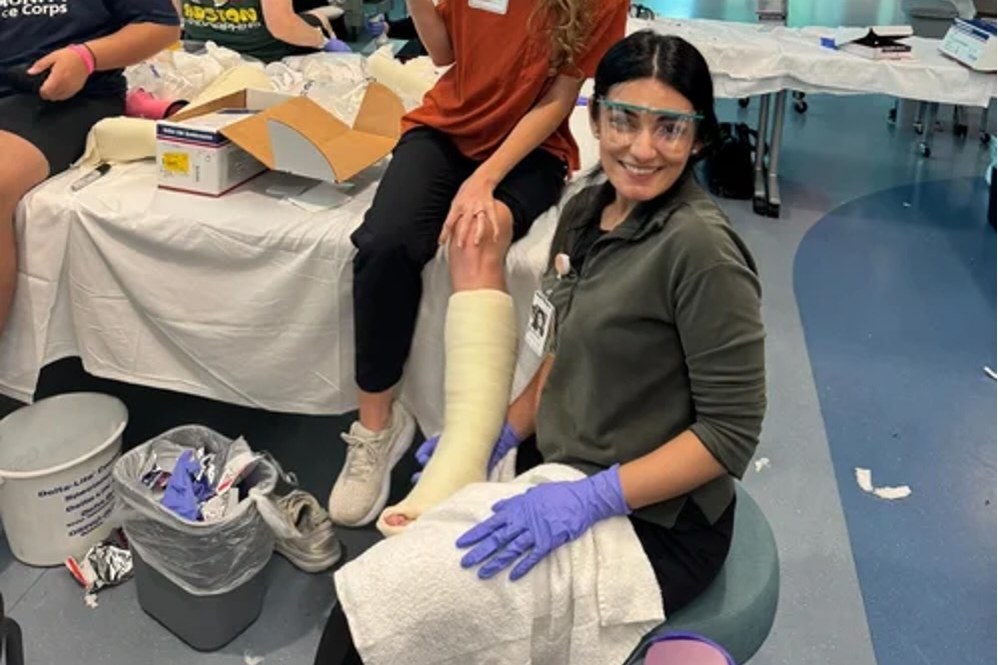
Walk away with a complete spasticity management playbook. Move beyond muscle tone to assess and manage the complex presentation of upper motor neuron syndrome. Learn how to leverage medical, procedural, and rehabilitation interventions, including a hands-on serial casting lab.
Spasticity Syndrome: Collaborative Assessment and Management is a practical course for comprehensively treating upper motor neuron syndrome. Learn the medical foundations, assess spasticity with evidence-based tools, tell it apart from other movement impairments, and trace its functional consequences. Assessment is followed by a full intervention menu: functional rehabilitation strategies, pharmacology, chemodenervation, surgical options, and neuromodulation. Throughout, the emphasis is clinical reasoning, collaborative goal setting, and integrating rehabilitation with medical management.
The course closes with a hands-on serial casting lab and case-based planning across multiple diagnoses, so you leave with a complete, patient-centered management plan — not just a list of options.
Audience
PT and OT, intermediate to advanced
Format
- 8-hour interdisciplinary professional development session with serial casting workshop
- Presentation depth and timing are customizable to audience needs and available virtually or in-person.
- Lab available in-person only.
Objectives
By the end of the course, clinicians will be able to:
- Differentiate the neurophysiologic mechanisms, clinical presentation, triggers, and secondary complications of upper motor neuron syndrome and spasticity.
- Evaluate the full intervention menu — rehabilitation strategies, pharmacology, chemodenervation, surgical options, and neuromodulation — by indication, benefit, limitation, and functional impact.
- Build a complete, evidence-based, patient-centered spasticity management plan through interdisciplinary collaboration.
- Apply the plan hands-on in the serial casting lab and case-based planning across multiple diagnoses.
Agenda
| 9:00 – 9:15 | Teaching | Welcome Course Introduction |
|---|---|---|
| 9:15 – 10:15 | Teaching | Foundations |
| 10:15 – 10:30 | Break | |
| 10:30 – 11:30 | Teaching | Spasticity Assessment Goal Setting Interdisciplinary Collaboration |
| 11:30 – 12:30 | Teaching | Interventions Menu |
| 12:30 – 1:30 | Lunch | |
| 1:30 – 1:45 | Teaching | Clinical Reasoning Synthesis |
| 1:45 – 3:15 | Lab | Serial Casting Demonstration Serial Casting Lab #1 – Guided Practice |
| 3:15 – 3:30 | Break | |
| 3:30 – 4:45 | Lab | Serial Casting Lab #2 – Guided Practice |
| 4:45 – 5:00 | Teaching | Closing |
Keywords
spasticity, upper motor neuron syndrome, serial casting, botulinum toxin, intrathecal baclofen, neuromodulation, stroke, spinal cord injury, interdisciplinary collaboration, collaborative goal setting, patient-centered care